For Homes
We repair and clear gutters on single-family homes, duplexes and rentals across Slidell. You get photos of the problem and a written summary of what we fixed.
- Water over the front edge
- Drip at a seam
- Run pulling off the fascia
Gutter Repair Slidell LA is what we do when Louisiana rain starts running down your fascia instead of your downspouts. We fix sagging runs, leaking joints, pulled hangers and clogged troughs for homeowners across St. Tammany County. One call, one crew, and your roofline drains the way it was built to.
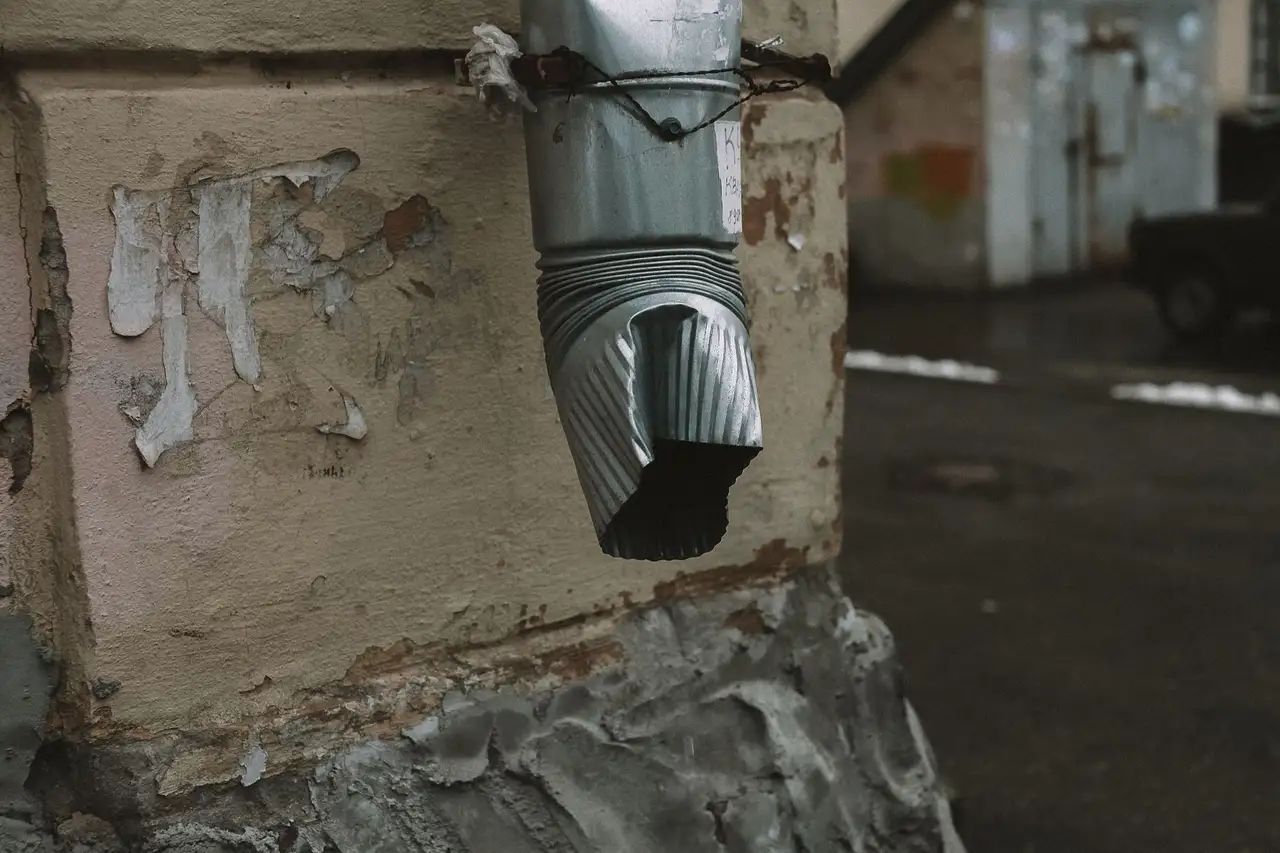 Clear the troughCheck the pitchTest the flow
Every gutter job we quote starts with a full system check, not just the spot you called about. Here is what is covered in a standard repair visit, and what we price separately if your system needs it.

We clear every run and flush every downspout, not just the section with the visible problem. A partially blocked downspout elsewhere on the house will back up the same system within a season, so we handle it in the same visit.
We check each hanger by hand and replace the ones that have pulled free of the fascia.
Open seams get wire-brushed down to bare metal, dried, and resealed. We do not seal over old caulk or over a wet joint, because that repair will fail within one rainy season and you will be calling someone again.
We set the fall at roughly a quarter inch per 10 feet toward the downspout. Runs that hold standing water after a storm get re-pitched, which stops the corrosion and mosquito breeding that standing water causes.
Crushed, rusted-through or split sections get cut out and replaced with matching material, including seamless pieces formed on site. We match the profile, color and size so the repair does not stand out from the street.
You get photos of the problem areas before and after, plus a short written summary of what we repaired and what to watch. If storm damage is involved, those photos are useful for an insurance claim.
The approach is the same for a home and a business. What changes is the access, the schedule and who needs the paperwork.
We repair and clear gutters on single-family homes, duplexes and rentals across Slidell. You get photos of the problem and a written summary of what we fixed.
We service long gutter runs, scuppers and downspout systems on Slidell storefronts and small commercial buildings. Work can be scheduled around your business hours.
A plain-language look at what Gutter Repair involves and when it is needed.
See how it worksGutter Repair Slidell LA is the trade of restoring a failed rain-handling system: resealing open seams, re-pitching sagging runs, replacing rusted sections, re-hanging pulled spikes and hangers, and clearing the trough so water moves to the downspout instead of over the edge. We work on 5-inch and 6-inch K-style aluminum, half-round, and seamless sections formed on site, and we check the fascia behind every failed hanger before we put a screw back in it.
Slidell gets roughly 60 inches of rain a year, and most of it arrives in bursts that overwhelm undersized or clogged gutters. Pine straw, oak tassels and shingle grit fill a trough fast, and once water backs up it finds the fascia board, the soffit and eventually your ceiling. That is why we treat gutter repair and cleaning Slidell jobs as one service, not two, and why we recommend a seasonal check before hurricane season and again after the leaves drop.
A gutter only works when the trough is clear, the pitch is right and the downspout drains.
Five steps, no mystery. Here is exactly what happens from the first phone call to the final walk-around.
You call (844) 468-1599 or book online and tell us what you are seeing: a drip at a joint, water sheeting over the edge, a run pulling away from the fascia, or a downspout that will not drain. We ask for your ZIP and the approximate linear footage, then set a window that fits your day.

A crew member walks the roofline with a ladder stabilizer, checks every hanger and seam by hand, and uses a moisture meter on the fascia where the gutter has been leaking. We photograph problem areas and show you the pictures before any work starts. Most inspections take 20 to 30 minutes.
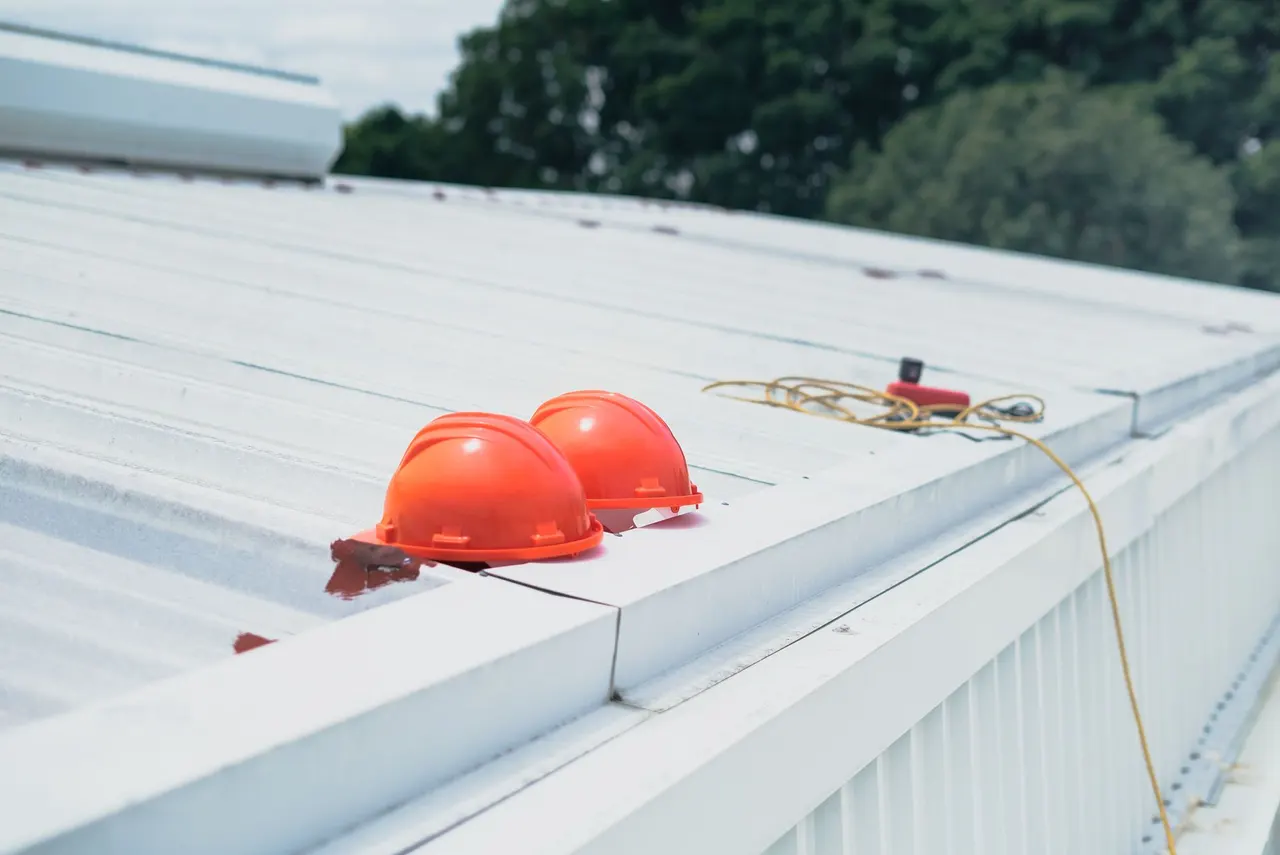
We blow out the trough with a leaf blower, flush the downspouts with a hose, and bag the debris. On a typical 150-foot run this takes 45 minutes to an hour. If the downspout is packed with shingle grit, we pull the elbow and clear it by hand rather than forcing water through.

Sagging runs get new hidden hangers set into the fascia, open seams get cleaned and sealed with gutter sealant, and rusted or crushed sections get cut out and replaced with matching material. We re-pitch the run so it falls roughly a quarter inch every 10 feet toward the downspout. Most repairs finish in two to four hours.
We run water from a hose at the high end of the run and watch it travel all the way to the discharge point. Then we walk the perimeter with you, show you the photos, and tell you what to watch for next season. You get a written summary of what was repaired and what we recommend keeping an eye on.

Move across a circle, or focus it and press Enter, for an illustrative thermal view of the photograph.

Keeps the ladder off the gutter edge so we do not crush the very run we are repairing, and keeps the crew tied off on two-story work.
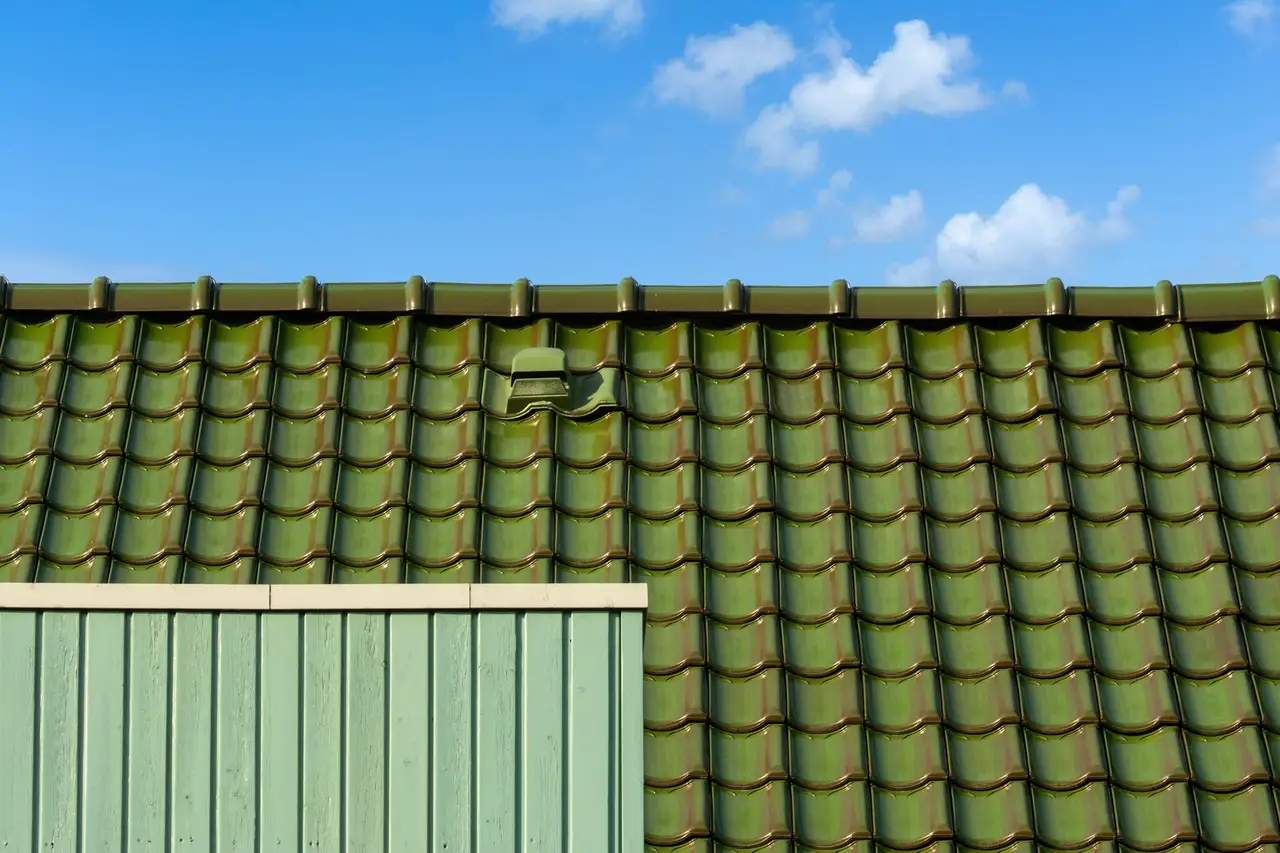
Clears pine straw, oak tassels and shingle grit from the trough quickly, so we spend our time on the repair rather than the cleanout.
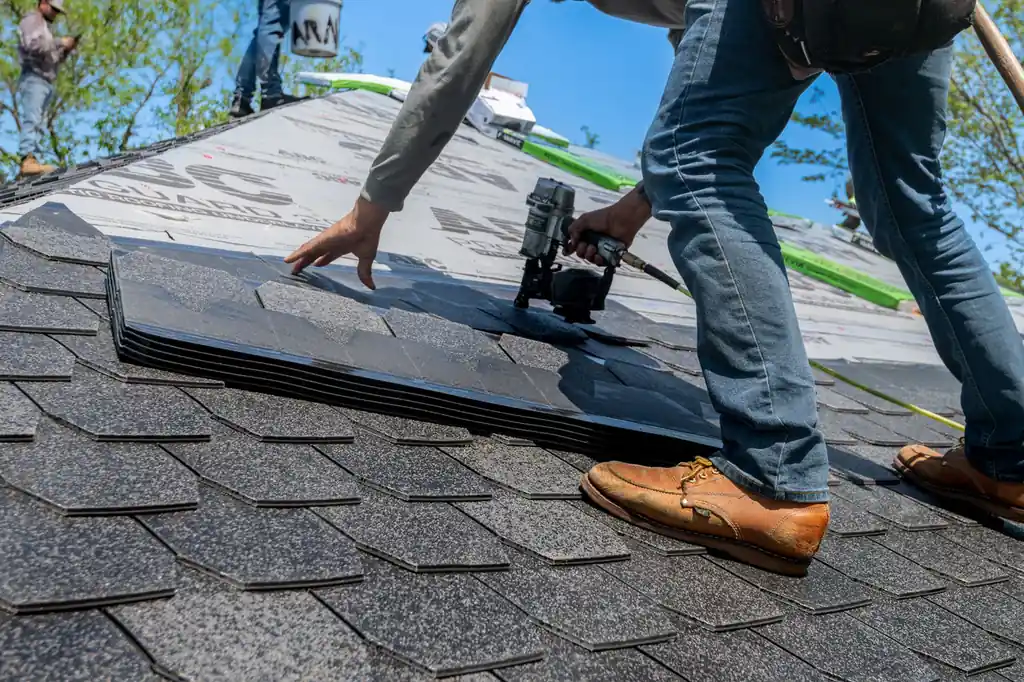
Reads the moisture content in fascia and soffit boards so we know whether the wood behind a leaking gutter is still sound enough to hold a hanger.
Finds hidden moisture behind walls and ceilings when a gutter leak has been running long enough to reach the interior of the house.

Runs new gutter to the exact length on site, so a replacement section has no lap joints to collect debris and leak.
Thermal views are illustrative, generated from the photographs.
Strips oxidized sealant and built-up grit off seams and fascia before we reseal, which is what makes the new seal actually bond.
Sets a consistent fall along the run so the pitch is correct from end to end, not just at the section we are working on.
We set every run to fall roughly a quarter inch per 10 feet toward the downspout. That is enough slope to move water in a light rain without making the gutter line look crooked from the street.
After any repair we run water from a hose at the highest point of the run and watch it travel all the way to the discharge. If it stalls or backs up anywhere, we find out before we leave, not during your next storm.
We wire-brush old sealant off the joint, dry the metal, and apply fresh gutter sealant to clean aluminum. Sealing over old caulk is the reason so many gutter repairs fail within a year.

A homeowner in Cross Gates notices water pouring over the gutter during a summer downpour and mulch washing out of the beds below.
We clear the packed trough and downspout, find the run has lost its pitch, and reset it with new hangers. We also add a downspout extension so discharge lands well clear of the foundation.
Outcome: The next storm drains cleanly to the street, the beds stay put, and the foundation soil stops getting soaked twice a week.
A two-story home near Lakeshore Village has a persistent drip at a seam that has been resealed twice by someone else and keeps coming back.
We clean the joint down to bare metal instead of sealing over old caulk, replace the failed section with a seamless piece formed on site, and re-hang the run to take the stress off the joint.
Outcome: The drip stops, the fascia dries out, and the homeowner avoids the carpentry repair that was coming if the leak had run another season.
After a named storm, a property in Northshore Beach has a gutter run hanging loose from the fascia and a crushed downspout elbow.
We document the damage with photos, re-hang the run with new hangers into sound wood, replace the crushed elbow, and provide a written summary the homeowner can send to their insurer.
Outcome: The system is back in service within a day, and the homeowner has the documentation needed to support the claim.

A rental property manager in Downtown Slidell needs gutters cleared and checked on four units before hurricane season.
We schedule all four properties on the same day, flush every run and downspout, replace the hangers that have pulled, and send photos of each unit back to the manager.
Outcome: All four buildings are storm-ready in one day, with a photo record on file for each property.

A homeowner in Pinewood has a ceiling stain and assumes the roof is leaking, but the roof was replaced two years ago.
We trace the moisture and find it is coming from a backed-up gutter wicking under the first course of shingles at the eave, not from the roof itself. We clear and re-pitch the run and seal the affected joint.
Outcome: The stain stops spreading, and the homeowner avoids paying for a roof repair that was never needed.
Slidell sits between the lake and the piney woods, and that combination is hard on gutters. The area gets around 60 inches of rain a year, most of it in intense bursts, and the tree load in neighborhoods like Pinewood and Tanglewood fills a trough with pine straw and oak tassels faster than almost anywhere else in St. Tammany County.
Older homes near Olde Towne and Downtown Slidell often have original 5-inch gutter that was sized for a smaller roof load and now overflows in a hard rain. Newer construction out at Oak Harbor and Cross Gates usually has the right size but hangers set too far apart, which lets the run sag within a few years. Humidity keeps sealant from curing properly if the joint is not dried first, so we always work seams dry.
If you are dealing with overflowing gutters repair Slidell LA homeowners call about every spring, the fix is usually a cleanout plus a pitch correction, not a full replacement. We also watch for the soil movement common on the bayou side of town, because a gutter discharging too close to the foundation makes that worse.
Before: A 60-foot back run had pulled away from the fascia on a two-story home, holding standing water after every storm. Two hangers had torn out of rotted wood, and water was running behind the gutter and down the wall.
After: We replaced the rotted fascia section, reset the run with new hangers at correct spacing, and re-pitched it to a quarter inch per 10 feet. A hose test confirmed full drainage to the downspout with no overflow.
Check the hangers each fall after the leaves drop and clear the trough before hurricane season. With the fascia repaired, this run should hold its pitch for years.
Before: A homeowner called about water pouring over the gutter at the front door every time it rained. The trough was packed with pine straw and two downspouts were completely blocked with shingle grit and debris.
After: We cleared all 140 feet of gutter, pulled and flushed both downspouts, and replaced one crushed elbow. The overflow stopped immediately, and the mulch in the beds below stopped washing out.
This property needs a third cleanout in midsummer because of the pine cover. We set a reminder for the homeowner and recommended gutter guards on the front run.
Before: An older home had four leaking seams along the front run, each one previously patched with caulk that had dried and pulled away. The fascia behind two of the seams had started to soften from months of slow dripping.
After: We stripped the old sealant to bare metal, dried each joint, and resealed properly. One section was too far gone and got replaced with a seamless piece formed on site. The fascia dried out and stopped deteriorating.
Inspect the seams each spring before the rainy season and reseal any that show cracking. Keeping the trough clear reduces the weight on the joints and extends the life of the seal.
Most gutter calls start with one visible symptom and turn out to have two or three causes. These are the failures we see most often on Slidell homes.
A clear, correctly pitched gutter moves storm water away from your home.
Water dumped at the foundation wall is the leading cause of slab movement and cracked brick in this soil. We extend downspouts and re-pitch runs so discharge lands 4 to 6 feet from the house, which keeps the soil under your slab at a stable moisture level through dry spells and downpours.
Rotted fascia is what happens when a gutter leaks at the back edge for a year. We catch it while the board is still sound, reseal the joint and re-hang the run, which avoids a carpentry repair that runs several hundred dollars more than the gutter fix itself.
An overflowing gutter carves a channel through mulch and topsoil every storm. Once we clear the trough and correct the pitch, water goes down the downspout instead of into your flower bed, and you stop re-mulching the same strip twice a year.
Backed-up water at the eave wicks under the first course of shingles and into the decking. Fixing the gutter removes that path, which is often the real source behind a ceiling water stain a homeowner assumed was a roof leak.
Clear records you can keep and share.
Before and after images of the repair
A short written record of what was fixed
How the run drained on the hose test
What to check next season
Most gutter calls are a repair job. Replacement only makes sense when the failure is widespread rather than isolated.
Isolated failures on an otherwise sound system
One run is failing while the rest holds
The whole system is past its service life
A list like this tells people straight away whether you cover their street. Not listed? Call and ask: it only takes a minute.
Based in Slidell and covering the places around it. Pick one for local details.
A simple reseal and re-hang on a single-story run often lands near the low end. Two-story work, rusted-through sections or full seamless replacement push it higher. We give you the number in writing before we start, and there is no charge for the estimate.
Nine times out of ten it is a clog, not a capacity problem. Pine straw, oak tassels and shingle grit pack the trough and the downspout elbow, so water backs up and sheets over the front edge. The other common cause is a run that has lost its pitch and now holds standing water. We clear the system, check the fall, and correct the hangers if the run has sagged.
A leak at a seam usually means the old sealant has dried out and pulled away, and the fix is to clean the joint down to bare metal, dry it, and reseal it. A leak at the back edge against the fascia is different, and it usually means the gutter has pulled loose and water is running behind it. That one needs new hangers and a re-pitch, not more sealant. If you are not sure which you have, we can tell you in a 20-minute inspection.
Twice a year is the baseline here: once in late spring before hurricane season and once in late fall after the leaves drop. Homes under pines or large oaks often need a third pass in midsummer. If you have gutter guards, you can usually stretch it to once a year plus a quick check after any named storm. Skipping the fall cleaning is what causes most of the overflow calls we get in January.
Other services from the same team.
One call gets a crew to your roofline, a written number, and a fix that holds through the next storm. We work across St. Tammany County and we answer the phone. Call (844) 468-1599 now.
Call us at (844) 468-1599 or send a message and we will get back to you the same business day. If you are in Slidell or anywhere in St. Tammany County, we cover you.